Designing marketplaces two audiences will love
 Product & UX
A marketplace is one of the hardest things to design well, because it has to please two masters at the same time. Buyers want choice, speed and trust. Sellers want demand, tools and fairness. Get the balance wrong for either side and the whole thing stalls. Here is what building AutoMarket and IT Finder Hub taught us.
The cold-start problem
Every marketplace begins empty, and empty is fatal. Buyers will not come without sellers; sellers will not come without buyers. The temptation is to launch broad and hope both sides show up. They rarely do at the same time.
The way through is to pick one side to over-serve first — usually the supply side — and make the product valuable to them even before the other side arrives. A provider dashboard that helps a business manage its own leads has worth on day one. Once supply is real and useful, demand has a reason to show up.
Design for the two sides differently
The mistake is treating both audiences as “users” and giving them one interface. They are not the same person and they are not in the same mood.
- Buyers want to decide. They need clarity, comparison, and confidence — fewer, better options surfaced fast.
- Sellers want to work. They need control, analytics and speed — tools that help them win and manage business, not just a listing form.
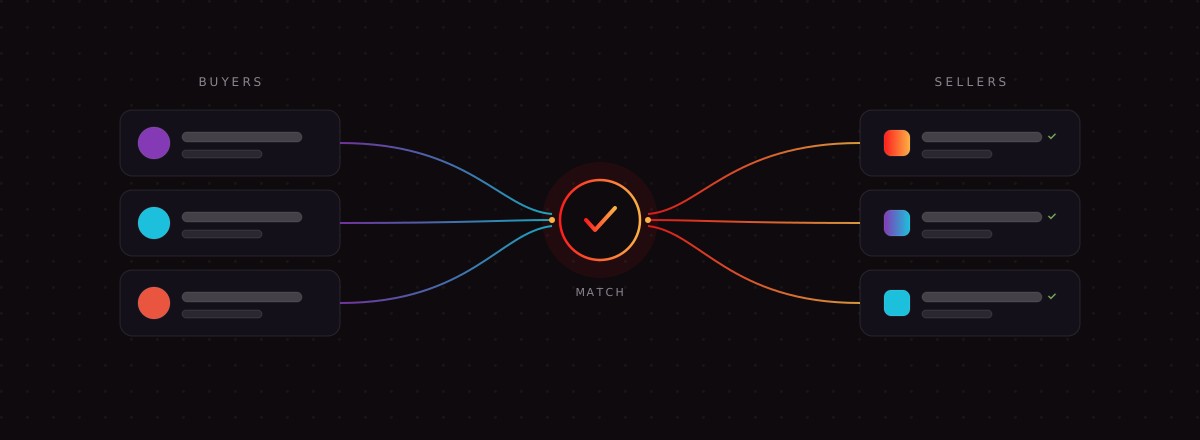
On IT Finder Hub, buyers post a requirement once and receive matched quotes to compare side by side; providers get a dashboard with leads, win rates and renewal reminders. Same platform, two deliberately different products.
Trust is the product
In a marketplace, you are not selling listings. You are selling the confidence to transact with a stranger.
Every successful marketplace is, underneath, a trust machine. Verification badges, ratings, reviews, response times, clear pricing — these are not features bolted on the side. They are the reason a buyer is willing to choose someone they have never met, and the reason a seller invests in showing up well. We design trust in from the first screen, not as a phase two.
Lessons from AutoMarket and IT Finder Hub
Two products, two markets, the same principles. On AutoMarket, AI-assisted listings and intelligent search made a huge catalogue feel navigable for buyers, while dealers got real analytics to sharpen how they sell. On IT Finder Hub, a post-once, get-matched model removed friction for buyers while feeding providers a steady stream of qualified demand — with zero commission, so both sides deal direct.
The through-line: a marketplace succeeds when each side feels the product was built for them specifically, and both sides trust what they see. Build for two audiences as if they were two products sharing a spine, and you give the network its best chance to catch.